
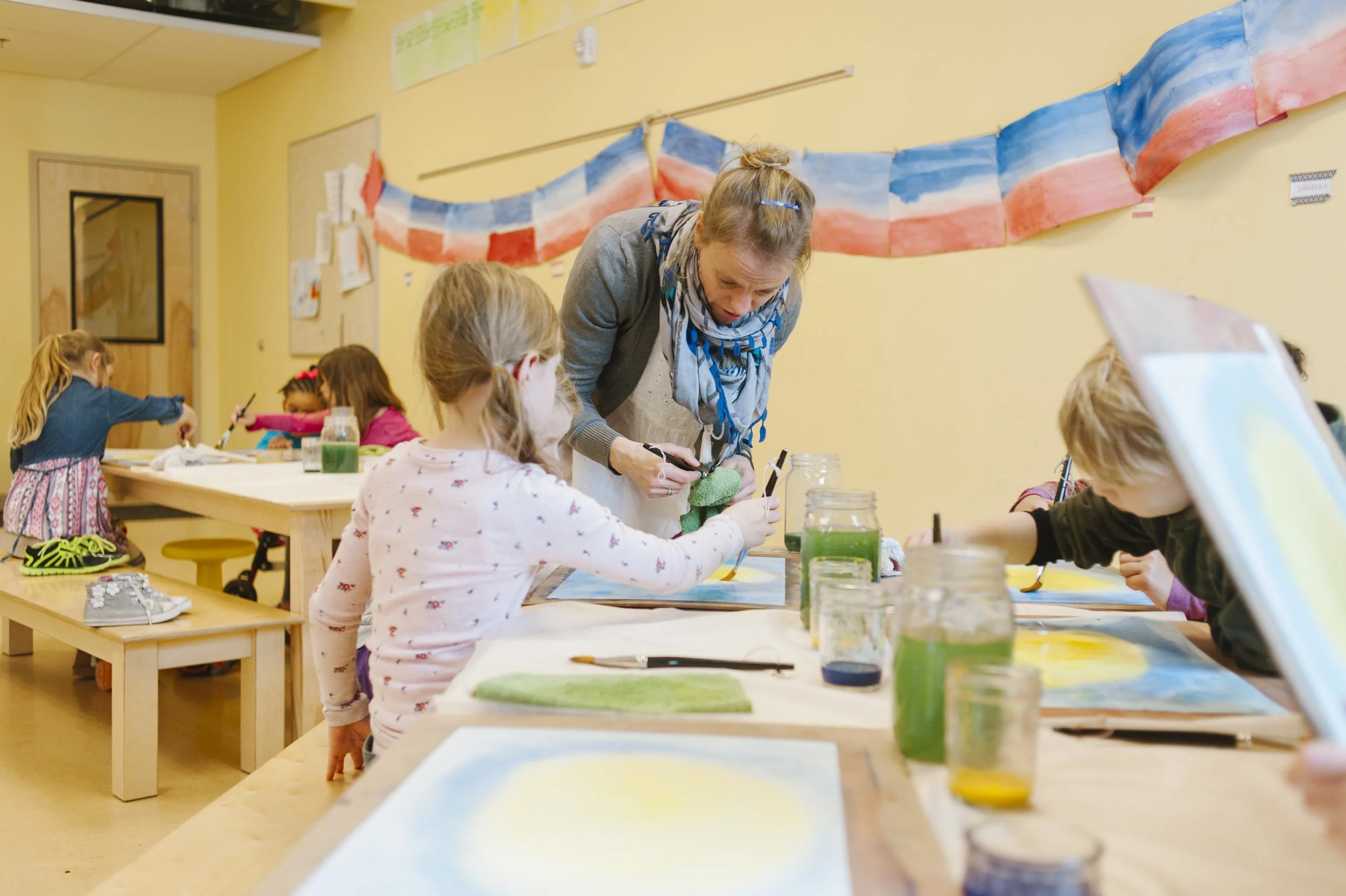
What is Waldorf Education
Waldorf education is a holistic approach to learning that emphasizes the development of the whole child, intellectually, emotionally, physically, and spiritually.
Waldorf education originated in Germany in 1919 and is based on the philosophy of Rudolf Steiner, founder of anthroposophy. The curriculum integrates arts, hands-on activities, and academics, focusing on fostering creativity, critical thinking, and a sense of social responsibility in students. Waldorf education aims to educate the "head, heart, and hands" by balancing intellectual, artistic, and practical learning.
The methodology is child-centered, with a focus on meeting the students' developmental needs at each age. The role of imagination is central, and education is designed to develop both creative and analytical thinking.
The Waldorf Difference
A distinctive approach to whole-child education.
At the Waldorf School of Bend, learning unfolds through imagination, movement, and meaningful work. Here, the whole child is engaged so confidence, creativity, and purpose can grow naturally from within.
Screen-Free
Learning
Protecting curiosity and focus during the foundational years allows imagination and deep attention
to thrive.
Teacher–Class
Continuity
Educators often stay with a class for multiple years, fostering stability, trust, and a deep understanding of how each child will best grow and thrive.
Community and
Celebrations
Festivals, gatherings, and shared traditions strengthen relationships and remind us that learning flourishes through connection and gratitude.
Main
Lesson Books
Students create their own
illustrated lesson books, transforming academic subjects into personal works of art that reflect understanding and pride.
Nature-based and
Outdoor Learning
Daily outdoor time connects students to the rhythm of the seasons and nurtures reverence, resilience, and joy in the natural world.

Integrated Subjects
-
Spanish is taught through stories, poetry, conversation, cultural study, and reading. Students deepen vocabulary, comprehension, and confidence while gaining insight into another culture.
-
Flute and recorder work, rhythm exercises, and eventually string instruments help children develop discipline and a love of music. Making music together strengthens memory while bringing joy to the classroom.
-
Through eurythmy and daily movement, children meet music, rhythm, and language through the body. Outdoor play and rhythmic games strengthen coordination and focus while supporting healthy social and physical development.
-
Knitting, sewing, and woodworking develop students' fine motor skills, patience, and concentration. It moves students from simple, imitative activities in early years to more complex crafts as they get older, fostering a sense of accomplishment and bringing a mindful, artistic quality to the act of making things by hand.
-
Math in Waldorf is woven into real activities, measuring, building, cooking, and form drawing. This provides children with a true number sense and confidence rather than relying on memorization.
-
Science unfolds through experimentation, nature study, and guided observation, helping students develop disciplined thinking and a genuine relationship with the natural world.
-
Artistic expressions like painting, drawing, modeling, and form drawing are woven throughout the week. Art isn’t just a class, it’s part of how our children learn. Helping them observe closely and express themselves in their work.
