GRADES 6-8
Supporting adolescents with developmentally aligned learning that strengthens emerging independence and clear thinking.
Junior High
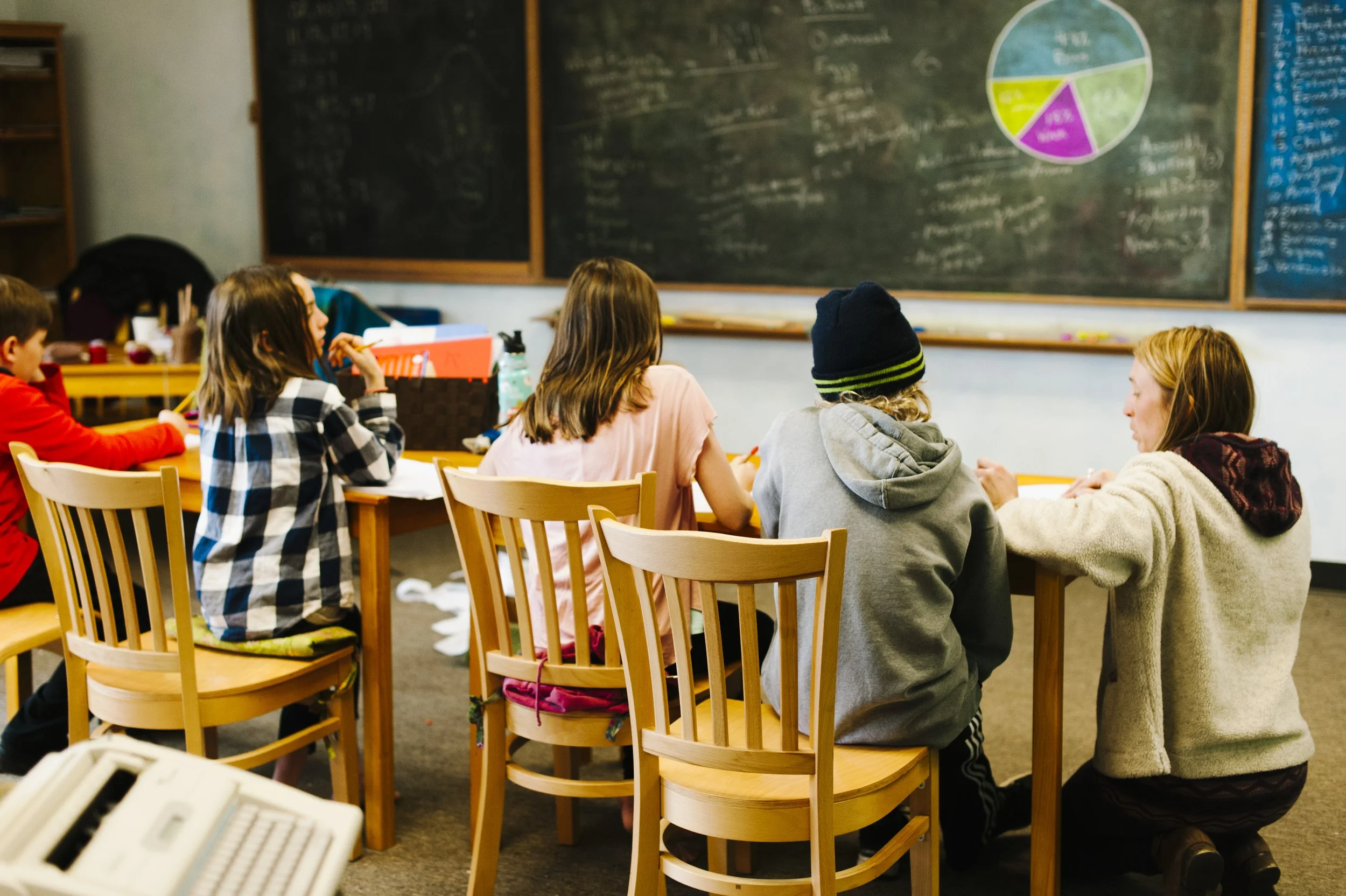
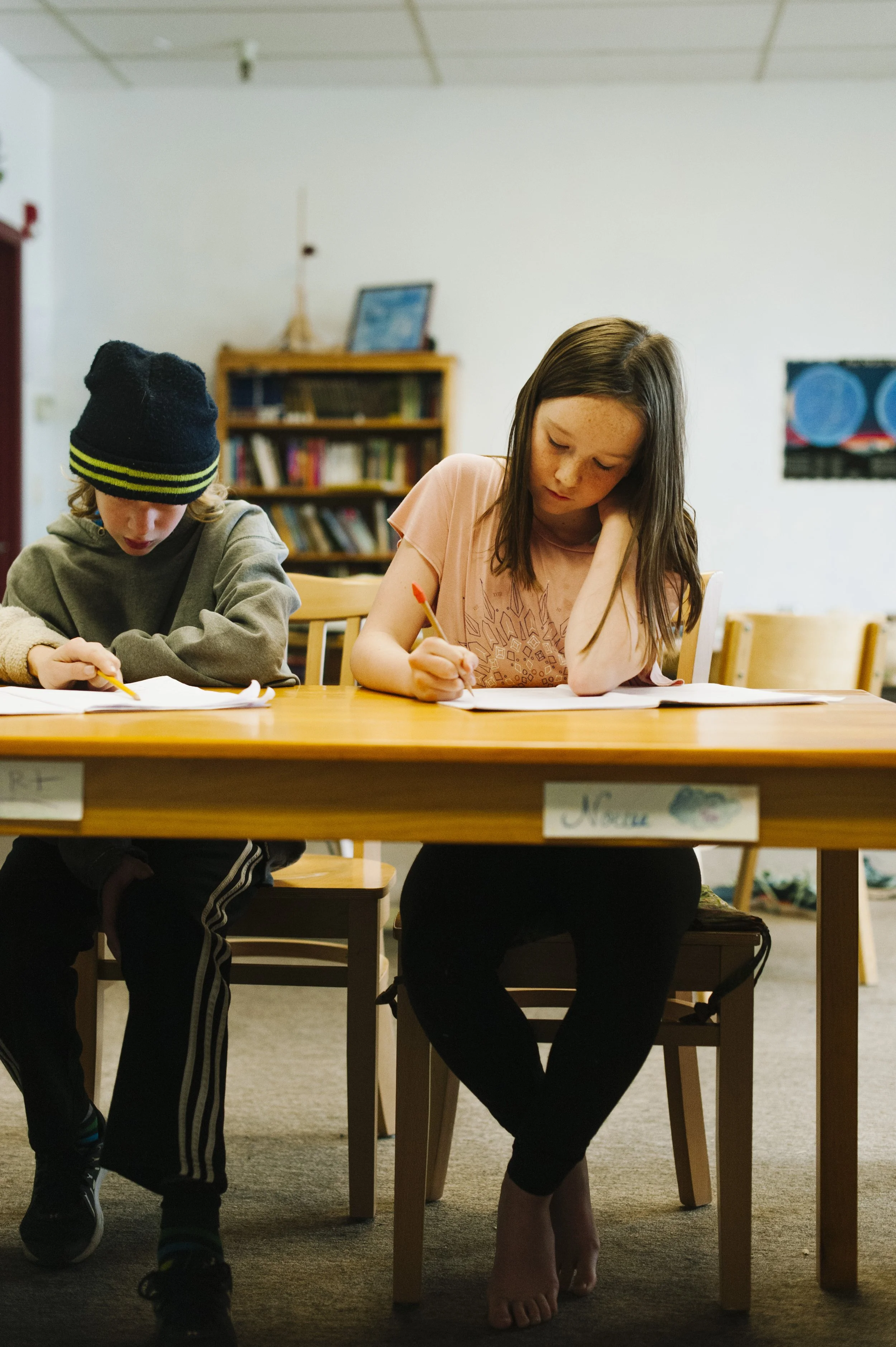
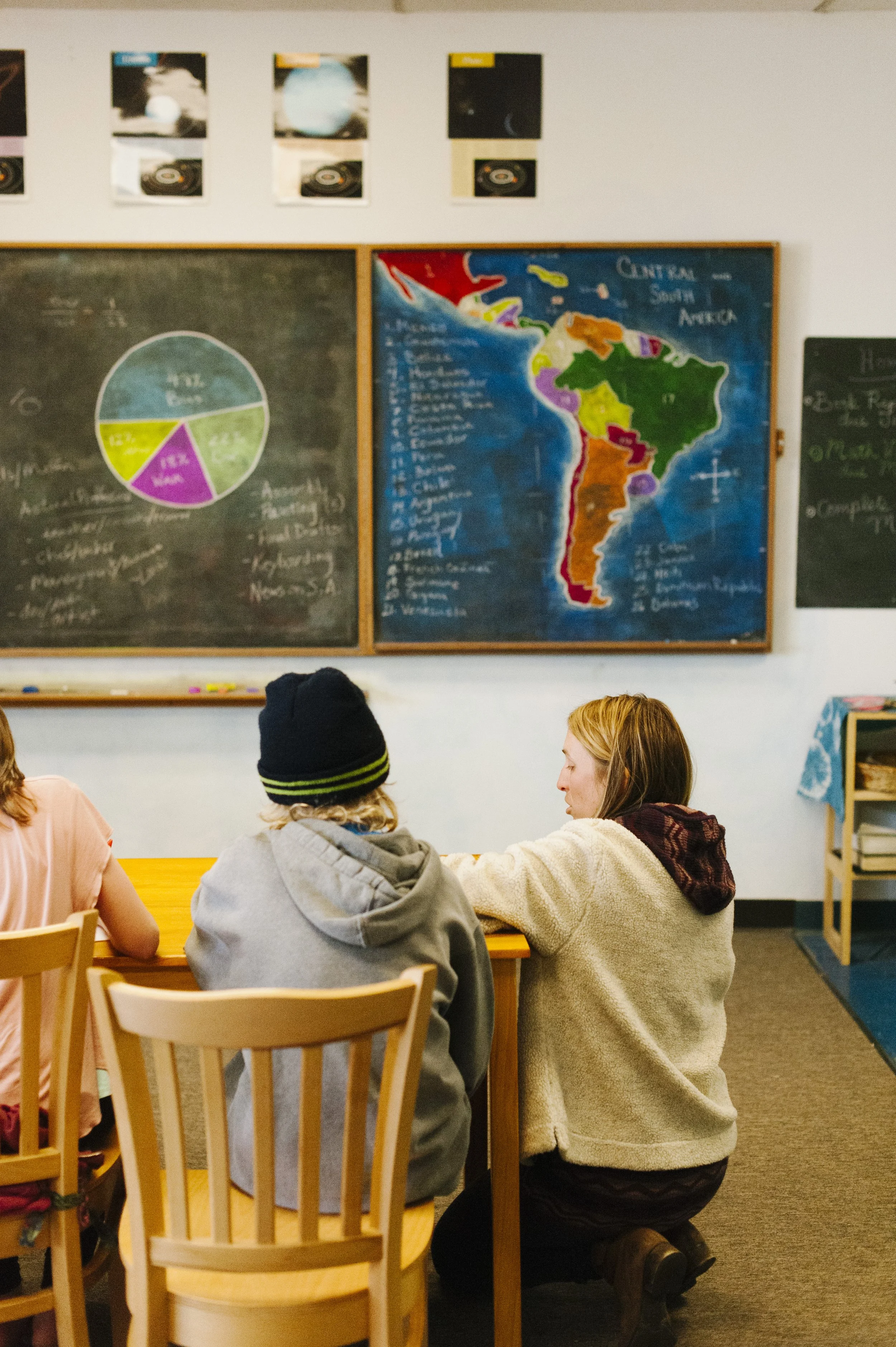
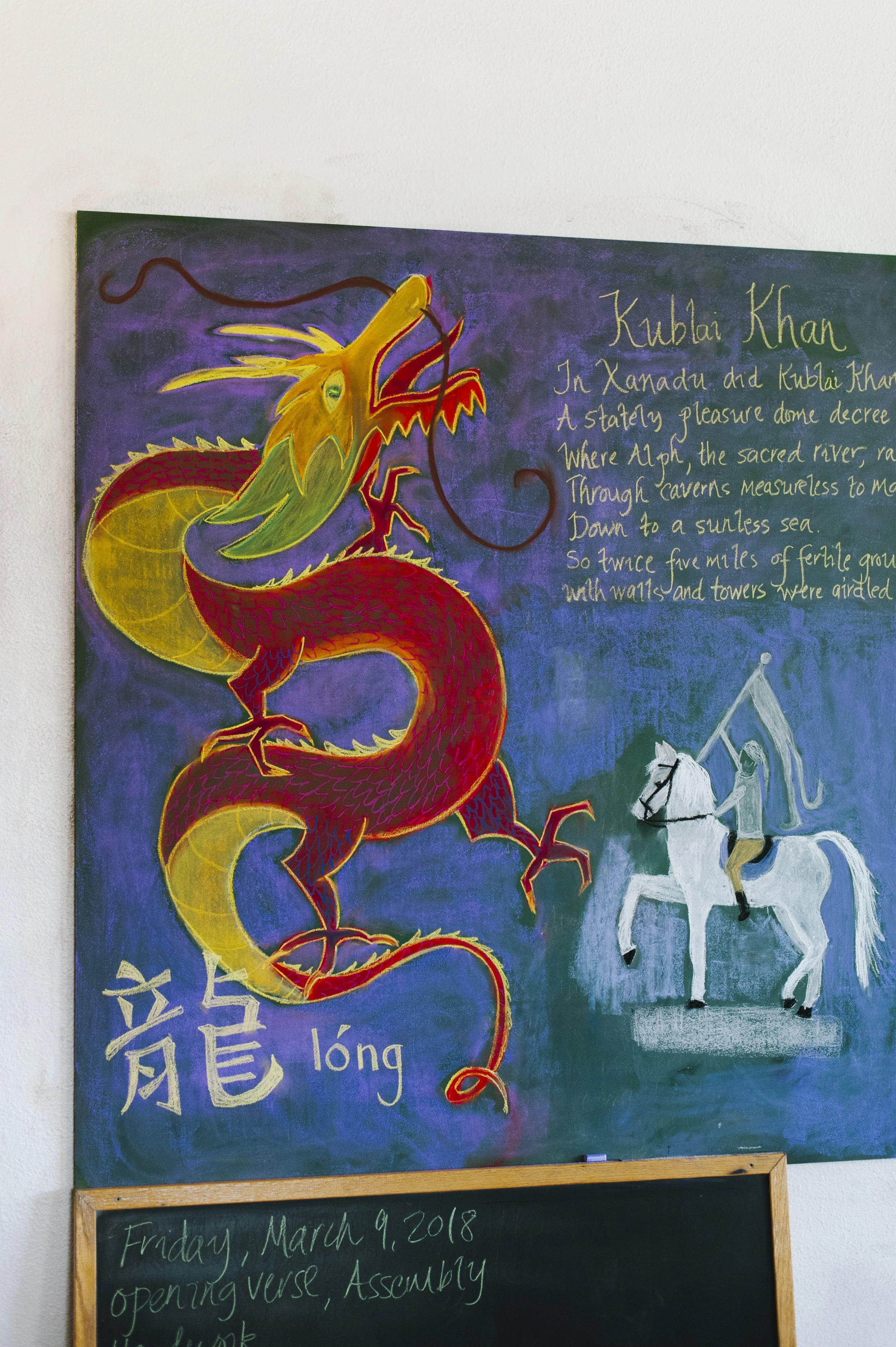
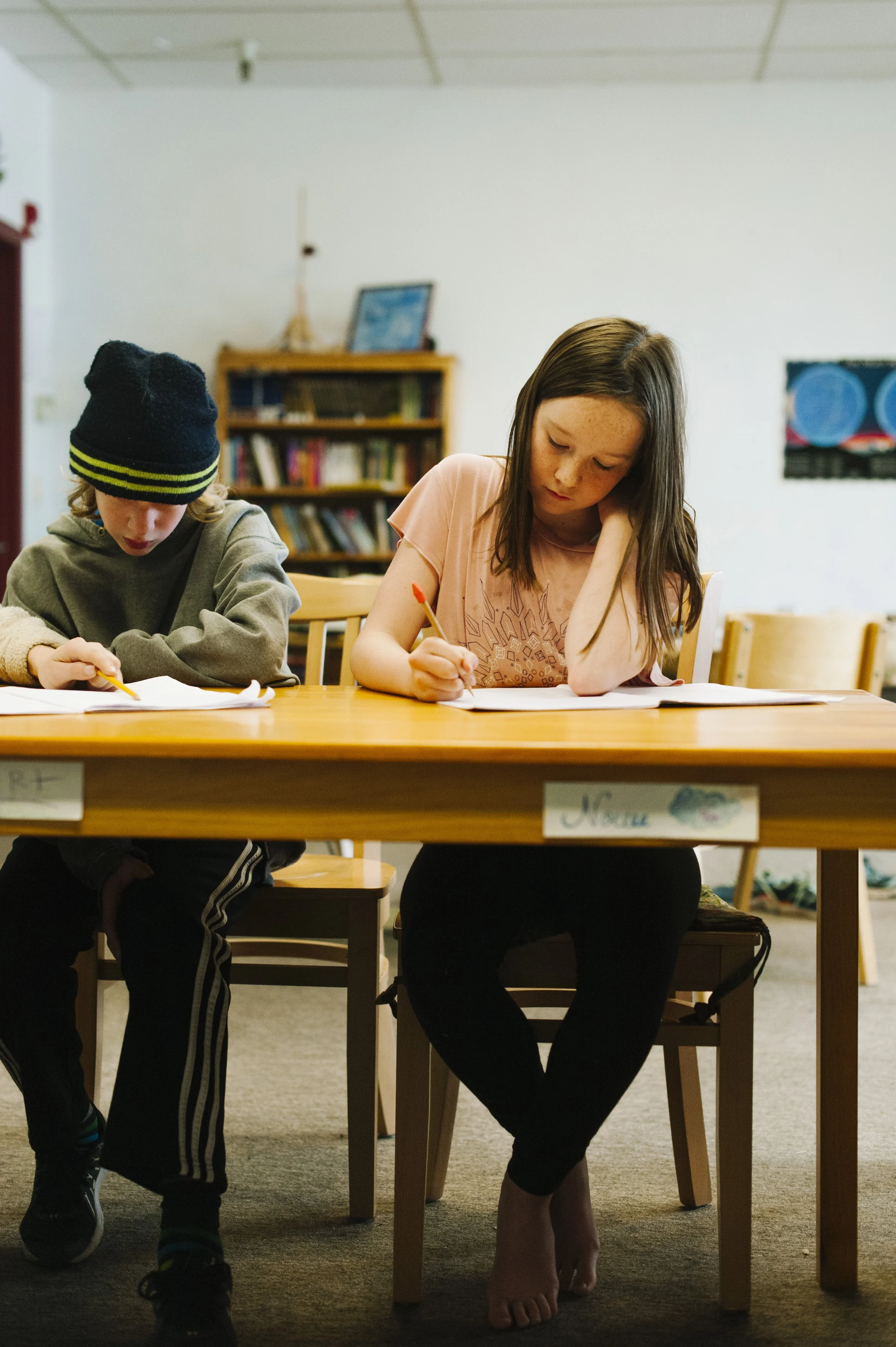
In Junior High, students enter a new stage of awareness. By sixth grade, they move from an imaginative view of the world to a stronger interest in what is factual and real. Waldorf teachers support this shift with subjects like Roman history, physics, business math, geology, and world geography, taught through hands-on, practical activities.
By seventh and eighth grade, students grow more independent, with sharper questions, personal interests, and a deeper capacity for discussion. The curriculum meets them with Renaissance history, algebra, chemistry, physiology, creative writing, perspective drawing, and substantial research projects. Classroom experiences foster a strong sense of capability and purpose.
Curriculum
Where learning deepens through inquiry and real world understanding
Our junior high curriculum meets students as they step into new capacities for reasoning and self-expression. Learning becomes more analytical, while still grounded in artistry and intention.
-
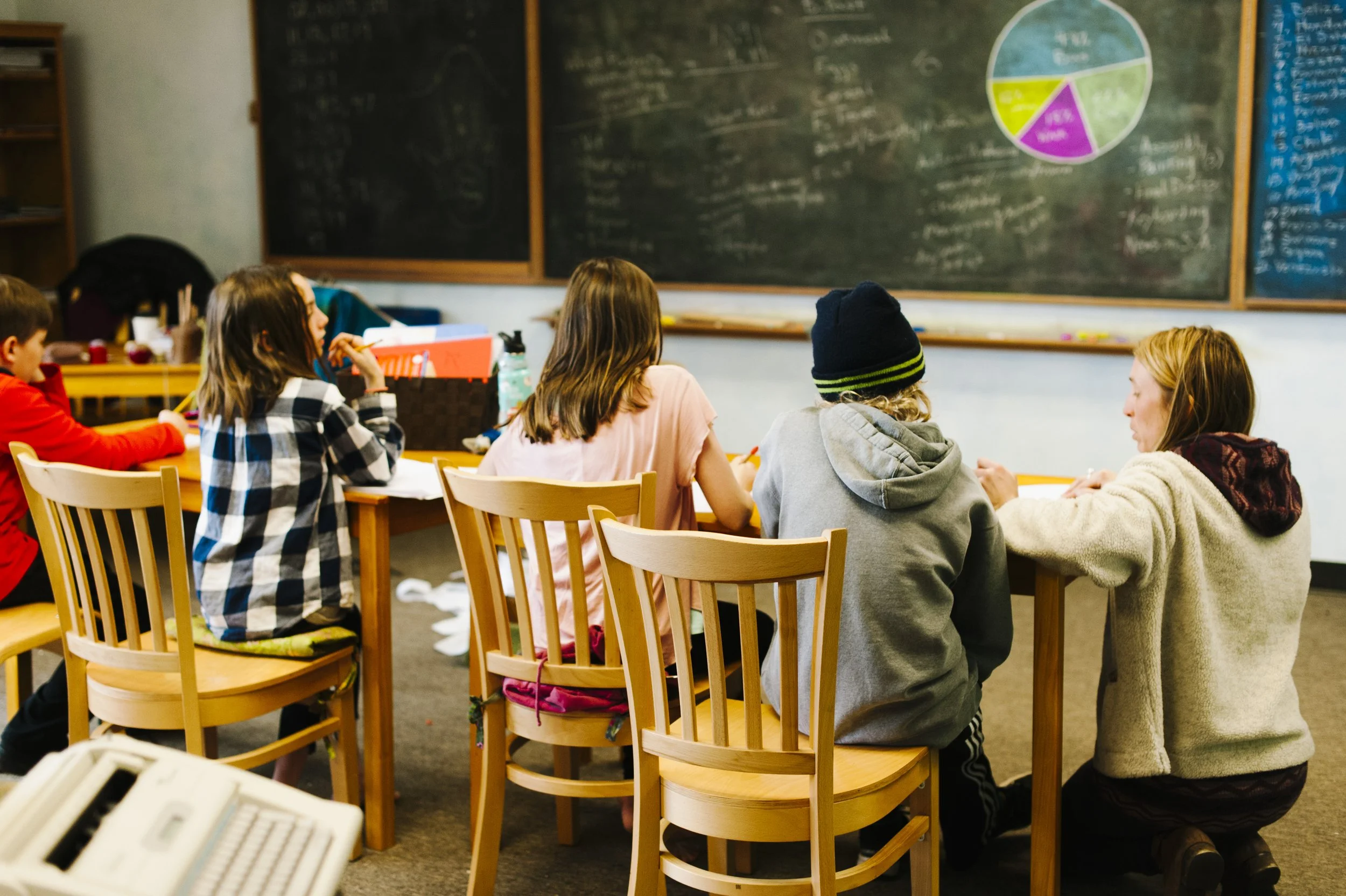
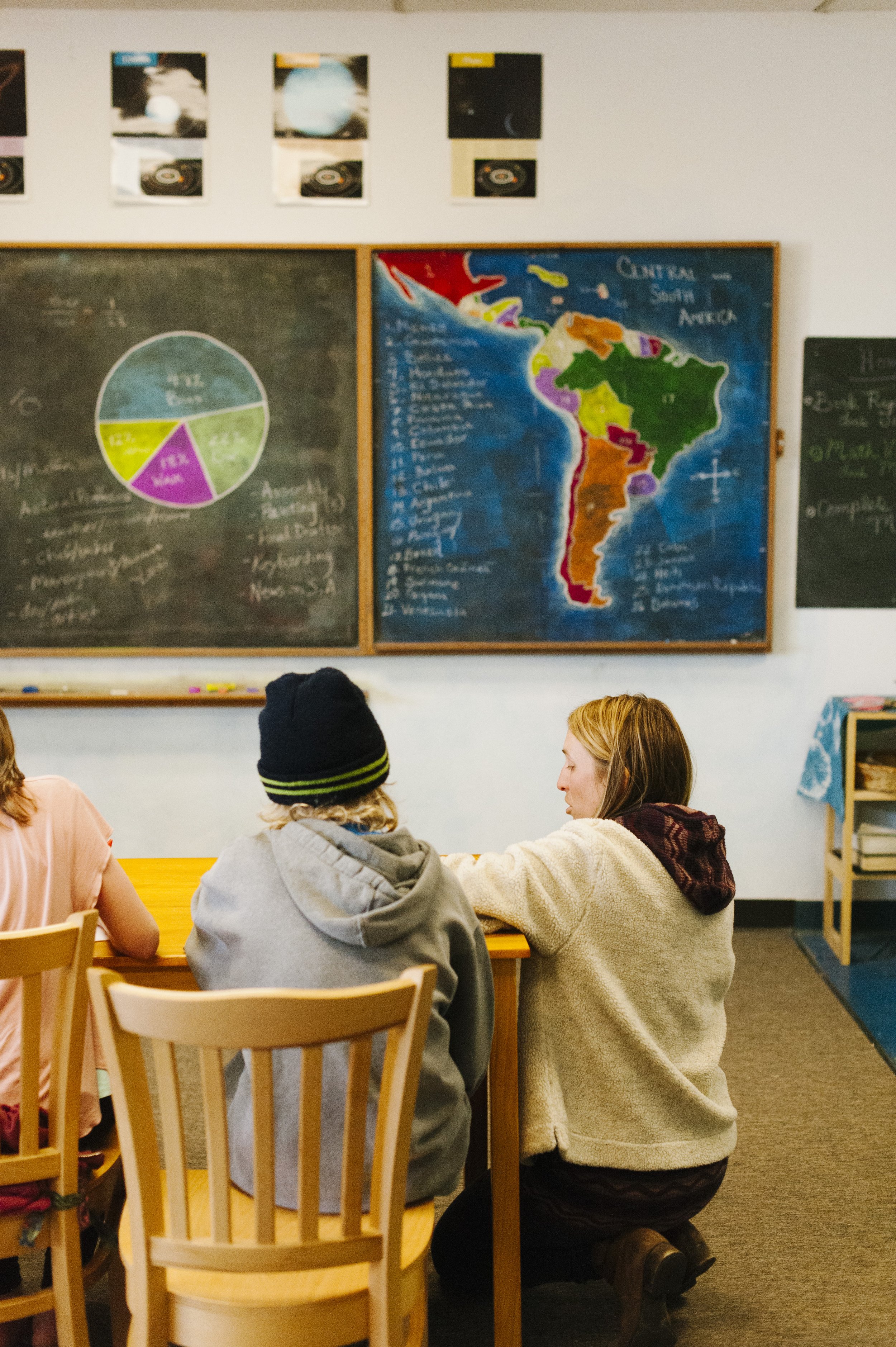
Main Lesson blocks expand into physics, chemistry, physiology, algebra, Renaissance and modern history, world geography, and literature. Subjects unfold through demonstration and discussion, giving students opportunities to form their own insights.
-
Movement meets the strength and energy of adolescence with athletics, games, coordination work, and more complex eurythmy forms. These activities support healthy development during a time of rapid physical change.
-
Sewing tailored garments, weaving, pattern drafting, and practical crafts build accuracy, patience and confidence. Students learn real skills with meaningful results, reinforcing focus and problem-solving.
-
Artistic work becomes more conscious and detailed with perspective drawing, charcoal, shading, portrait work, and modeling. Students learn to observe carefully, work with light and shadow and express ideas with growing intention and skill.
-
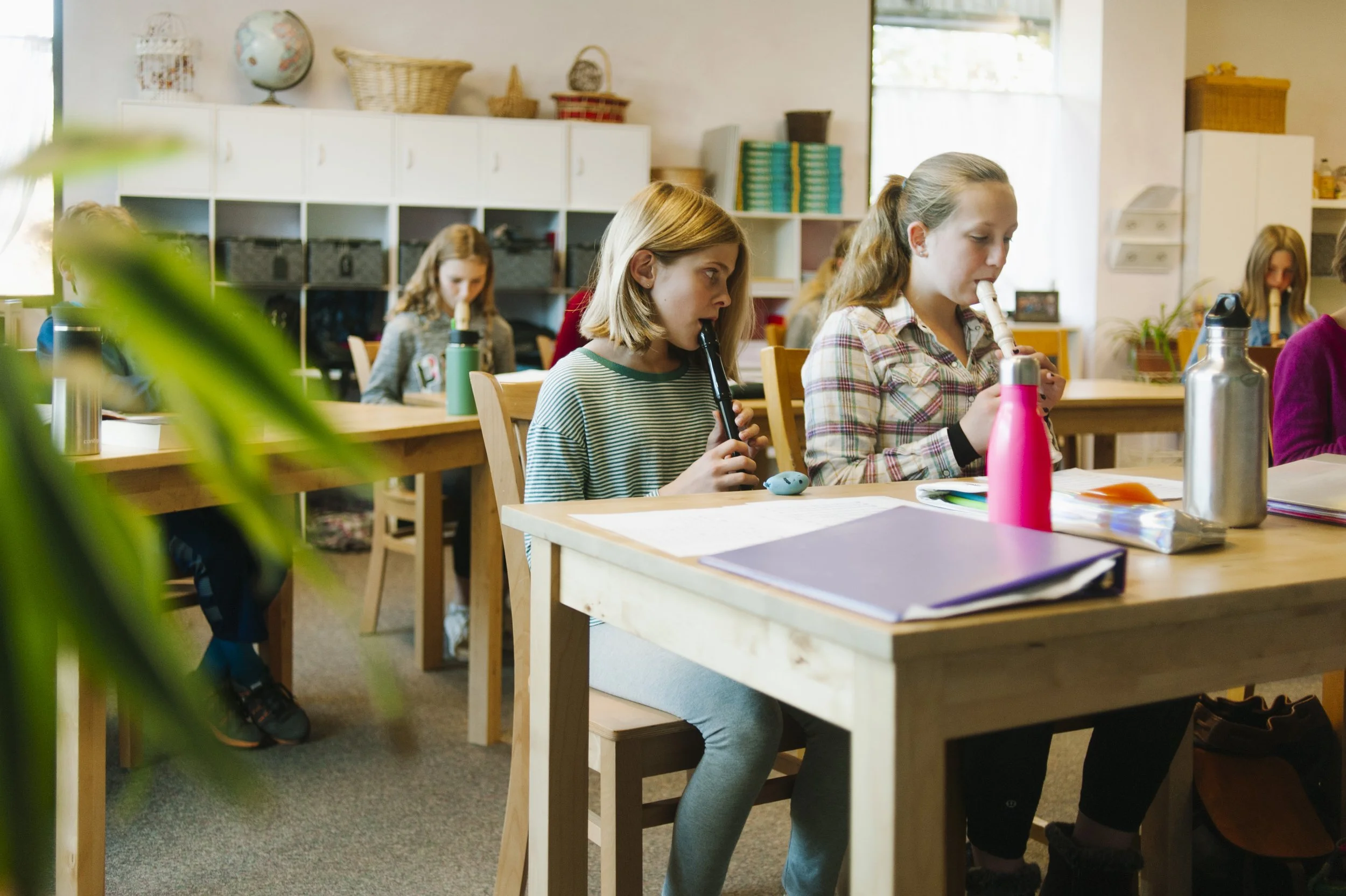
Music includes part-singing, ensemble work, recorder or strings and rhythmic studies. These experiences strengthen listening and emotional expression while bringing warmth to the classroom.
-
Spanish continues with stories, conversation, cultural study and reading suited to early adolescents. Students deepen vocabulary, comprehension, and confidence while gaining insight into another culture.
-
Upper grade students participate in multi-day trips, outdoor immersion experiences, field studies, and cultural excursions. The eighth grade year includes an Independent Study Project, a substantial research and presentation experience that marks a meaningful rite of passage into high school.
What we value in junior high
The principles that ground our work with emerging teens
-
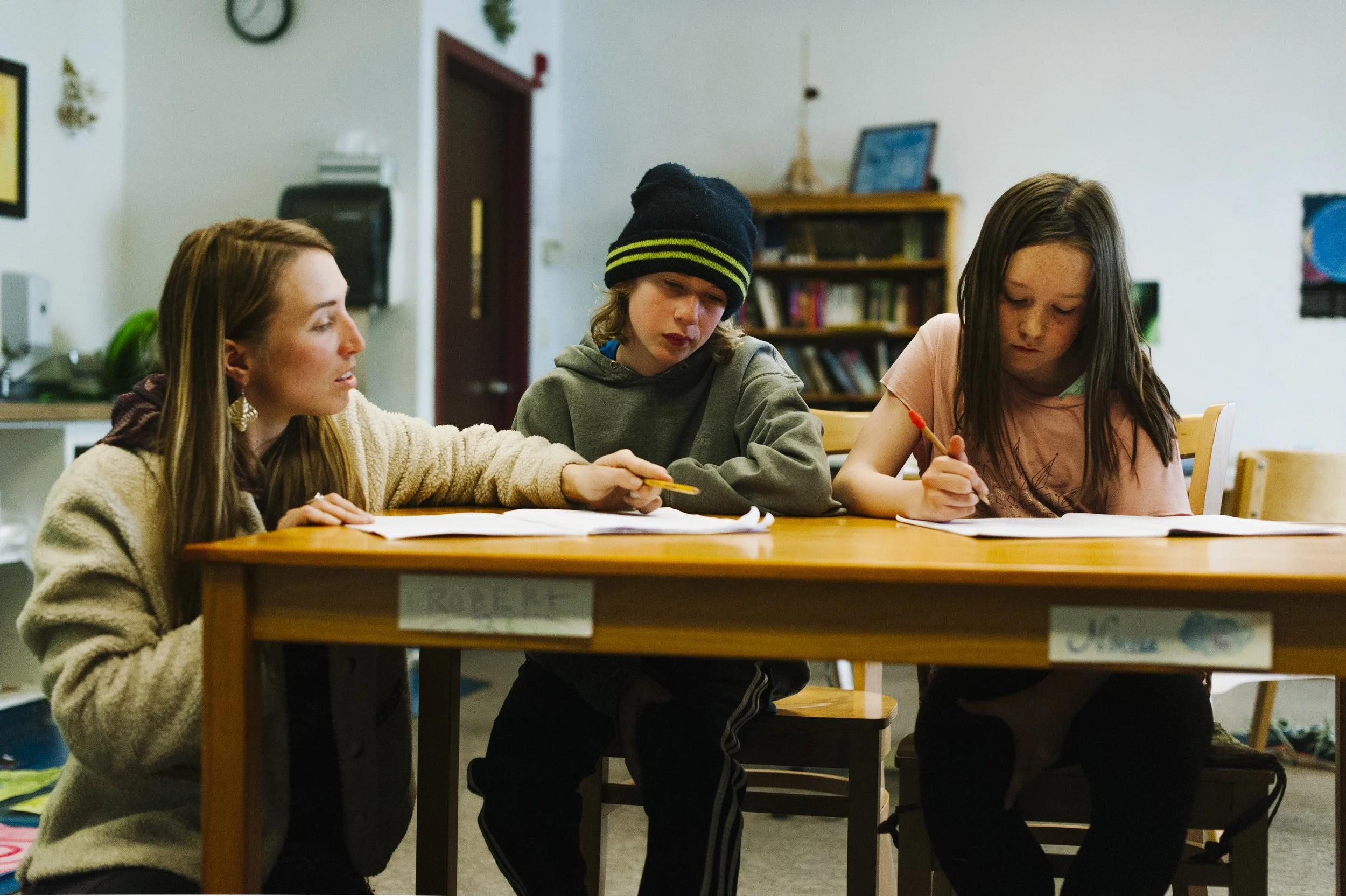
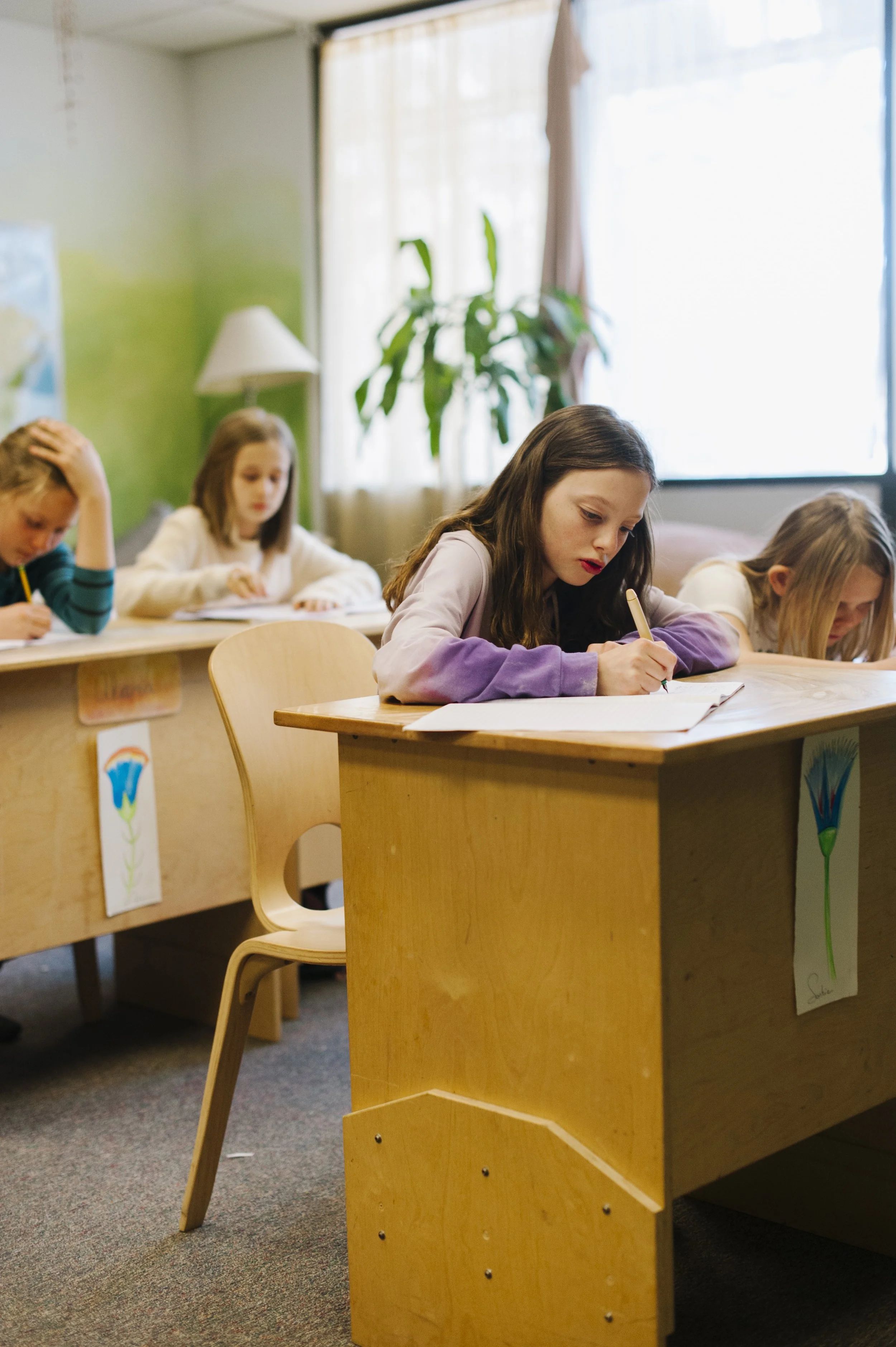
Our classrooms offer clear expectations and healthy boundaries while giving adolescents room to explore and grow. This balance helps students develop responsibility while feeling supported in their increasing independence.
-
Each day begins with an intentional check-in between teacher and student, creating a space for genuine awareness and trust. These moments help teachers recognize how students are arriving and support them through the social and emotional shifts of early adolescence.
-
Adolescents grow at different rhythms, and we meet them where they are. Through movement, practical work, artistic expression and individualized guidance, students deepen their confidence and emerging sense of identity.
-
Strong relationships matter deeply during the upper grades years. Consistent guidance and a close-knit class community give students a stable foundation as they navigate increasing independence and complex social dynamics.
-
Young people who understand themselves, can think independently, work constructively with others, and bring curiosity and initiative to their learning. Far beyond simply being able to recite facts.
Why families choose us
Waldorf offers a supportive, intentional community where young adolescents are guided with respect during a pivotal stage of growth.
Small class sizes and meaningful teacher-student relationships.
A community that values curiosity, integrity, and healthy social development.
A curriculum that challenges emerging thinkers.
Daily grounding in nature and movement.
Rich artistic work. Charcoal, perspective drawing, painting, sculpture, music, and drama.
A tech-free learning environment that protects and encourages face-to-face communication.
Classroom culture that nurtures independent thought.
Preparation for high school that goes far beyond academics.
Fostering young people who know themselves and bring confidence and initiative.
TUITION, FEES, AND FINANCIAL ASSISTANCE
A distinctive approach to educating the whole adolescent.
The Waldorf School of Bend offers an education that nurtures creativity, confidence, and character through meaningful, hands-on learning. Every lesson engages thinking, feeling, and doing. We develop capable, compassionate human beings prepared to meet life with purpose.
Journey through
the grades
GRADE 6
Crossing the Threshold Into Adolescence
In sixth grade children children enter a new stage of awakening and the curriculum meets this shift with Roman and Medieval history, the precision of geometry, the laws of physics, and the systematic study of world geography.
Students learn to think more objectively. This is the year where form meets force, where the emerging adolescent is guided to stand more firmly with growing confidence.
SOCIAL FOCUS
Students strengthen fairness and self-discipline, learning accountability for their choices.
-
Geology & Mineralogy - The earth’s structure, rock cycles, crystal forms, and precise observations
Ancient Rome - Roman history, legend to empire; mapping, composition, speech, and structured writing
Business Math - Percentages, profit and loss, simple interest, bookkeeping, and practical word problems
Geometry - Compass and straightedge constructions, precision work, shading, proofs-in-action, and form drawing
Physics - Acoustics, optics, heat, magnetism, and static electricity through observation-based experimentation and scientific writing
Geography - World regions, Europe, biomes, maps, charts, and descriptive writing
Medieval History - Feudal life, Islam and the Crusades, cathedrals, trade, inventions, and historical narration
Class Play - Drama, character work, ensemble collaboration, memorization, voice, and staging
Review Block - Year-end consolidation of math, writing, history, science, and practical skills
GRADE 7
The Renaissance of Adolescence
In seventh grade puberty marks the birth of the intellect. In the thirteen to fourteen year-old the need to question authority, experiment, and explore the world around them blossoms. Judgment is exercised liberally, but the ability to discriminate objectively is a long way off.
The study of the Renaissance is a theme throughout this year, providing a backdrop for lessons in mathematics, science, literature, and the arts.
SOCIAL FOCUS
Self-expression and curiosity deepen empathy, confidence, and independence.
-
Renaissance & Reformation - Rebirth of classical ideals through art, science, music, religion, and historical writing
Mathematics - Fibonacci sequence, Algebra, golden section, geometry, and the foundations of linear perspective
Inorganic Chemistry - Combustion, salts, acids and bases, water, and metals through observation and experiment
Creative Writing - “Wish, Wonder, Surprise” stories; imagination, voice, structure, and expressive language
Physics I - Acoustics, optics, thermodynamics, and electromagnetism through phenomena-based study
Health & Physiology - Body systems, hygiene, nutrition, and the foundations of adolescent health
Geography - World cultures with a focus on Africa; mapping, cultural study, and descriptive writing
Physics II - Mechanics, motion, force, and lawfulness in the physical world
Class Play - Drama, character work, collaboration, stagecraft, and spoken language
Age of Exploration - Explorers, encounters, global exchange, navigation, and world change
Review Block - Integration of academic, artistic, and practical learning for the year’s completion
GRADE 8
Adolescence in Full Bloom
Eighth grade is the crowning year of the Waldorf grade school. It is an opportunity to bring forth the many seeds planted and the sky's the limit with regard to what can be achieved.
We set our sights high and pave a path for the students that, while arduous, give them the experience necessary for a smooth transition into high school. This is a transformative year, and the students should feel that they have experienced a rite of passage when graduating.
SOCIAL FOCUS
Students emerge as capable leaders, ready to contribute thoughtfully to their communities.
-
Math - Algebraic thinking, solids and platonic forms, measurement, and practical applications
Physics - Hydraulics, pressure, electromagnetism, and meteorology through experimentation and observation
Organic Chemistry - Carbohydrates, proteins, and fats; digestion, metabolism, and practical laboratory work
History - American Revolution, Civil War, reform movements, and the shaping of the modern world
Short Story - Narrative craft, character, structure, and voice; reading and writing across genres
Class Play - Drama, staging, ensemble work, and confident public performance
Projects - Long-term independent research and craftsmanship integrating academic and practical skills
Geography - Meteorology, world economic systems, and global interdependence
Anatomy - Body systems, health, and understanding physiological change in adolescence
Graduation & Review - Completion of eighth-grade projects, reflection, mastery, and readiness for high school
“Our highest endeavor must be to develop free human beings who are able of themselves to impart purpose and direction to their lives. The need for imagination, a sense of truth, and a feeling of responsibility—these three forces are the very nerve of education.”
Rudolf Steiner
(Founder of Waldorf Education)