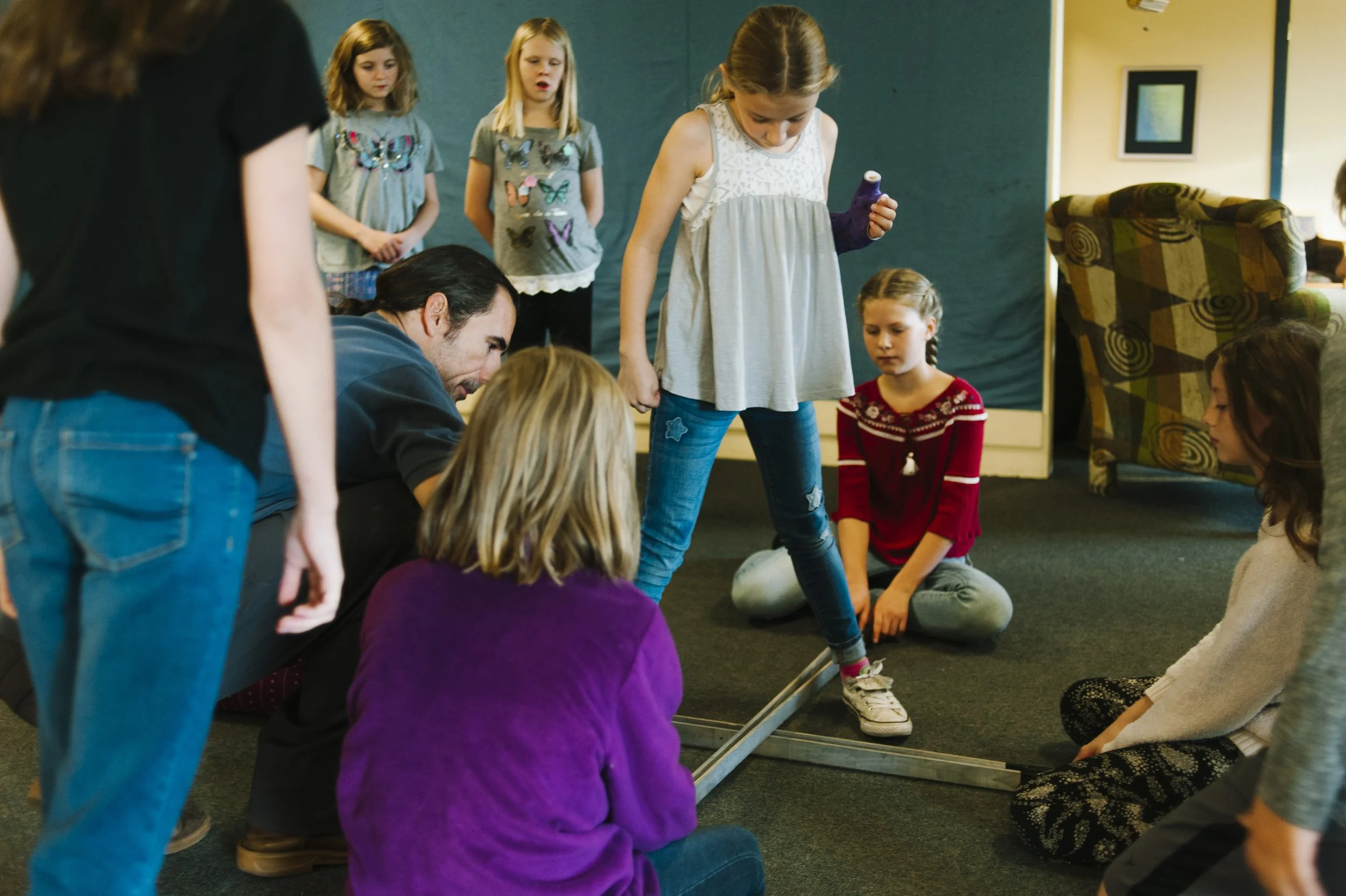
GRADES 1-5
The Waldorf School of Bend lower grades offer holistic and developmentally conscious learning in a screen-free classroom.
Lower Grades
In principle, Waldorf education aims to harmonize all aspects of learning with your child’s natural developmental moments.
Rather than external pressures defining curriculum, Waldorf teachers observe and respond to the developmental rhythms shaping their students’ perceptions of themselves and the world.
At its heart, the Waldorf approach is deeply intentional. Every story, subject, movement, and moment in the classroom is chosen to celebrate and support the organic readiness of a child’s mind, body, and spirit.
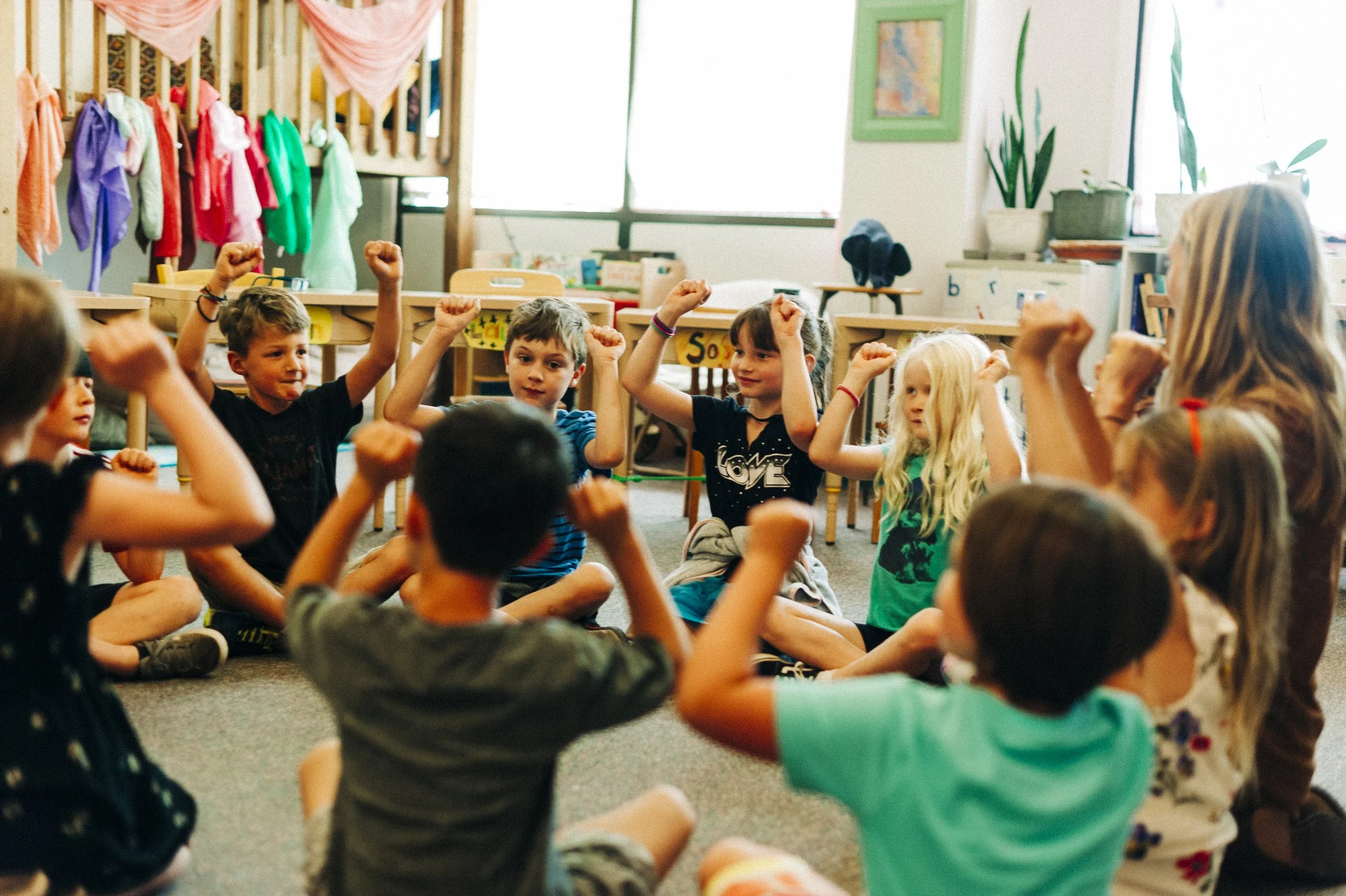
Grades 1 through 5 foster a joyful environment in which children grow not only academically, but emotionally through story, art, movement, and a purposeful daily rhythm.
Curriculum
Where learning comes alive through story, movement, art, and imagination
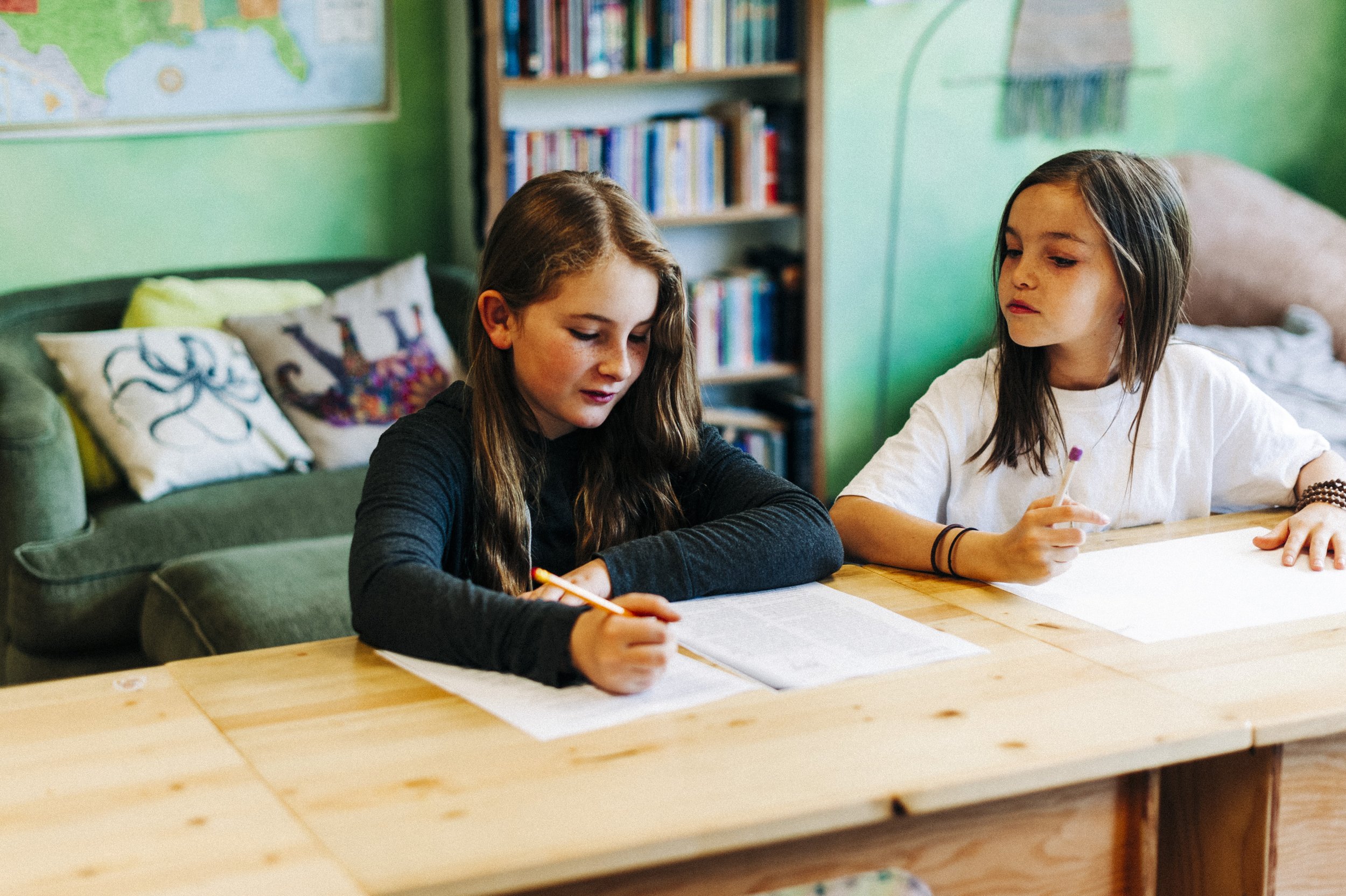
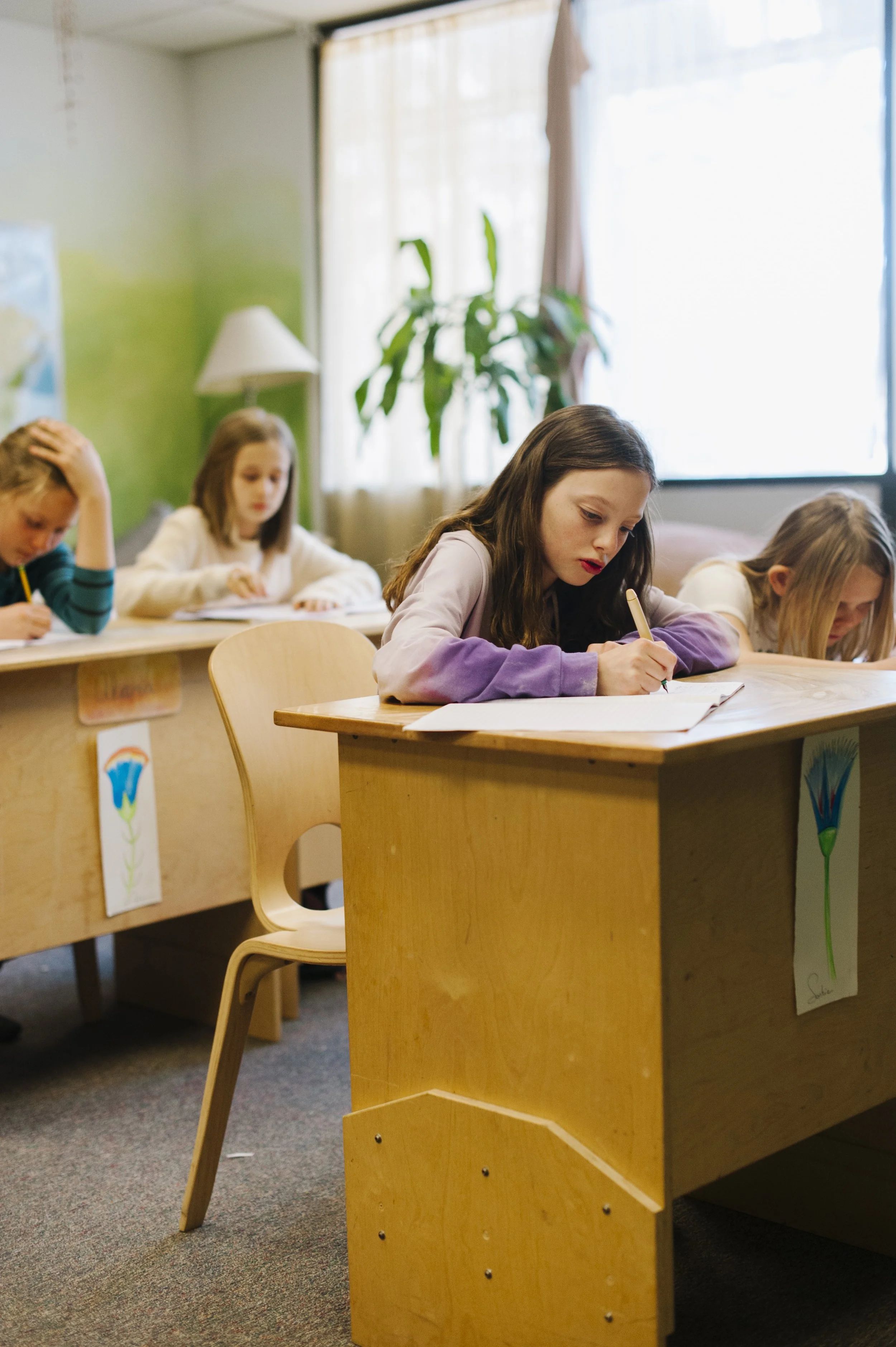
At Waldorf School of Bend, our tech-free curriculum engages the head, heart, and hands. Children learn through real experiences so academics feel alive and connected to daily life.
-
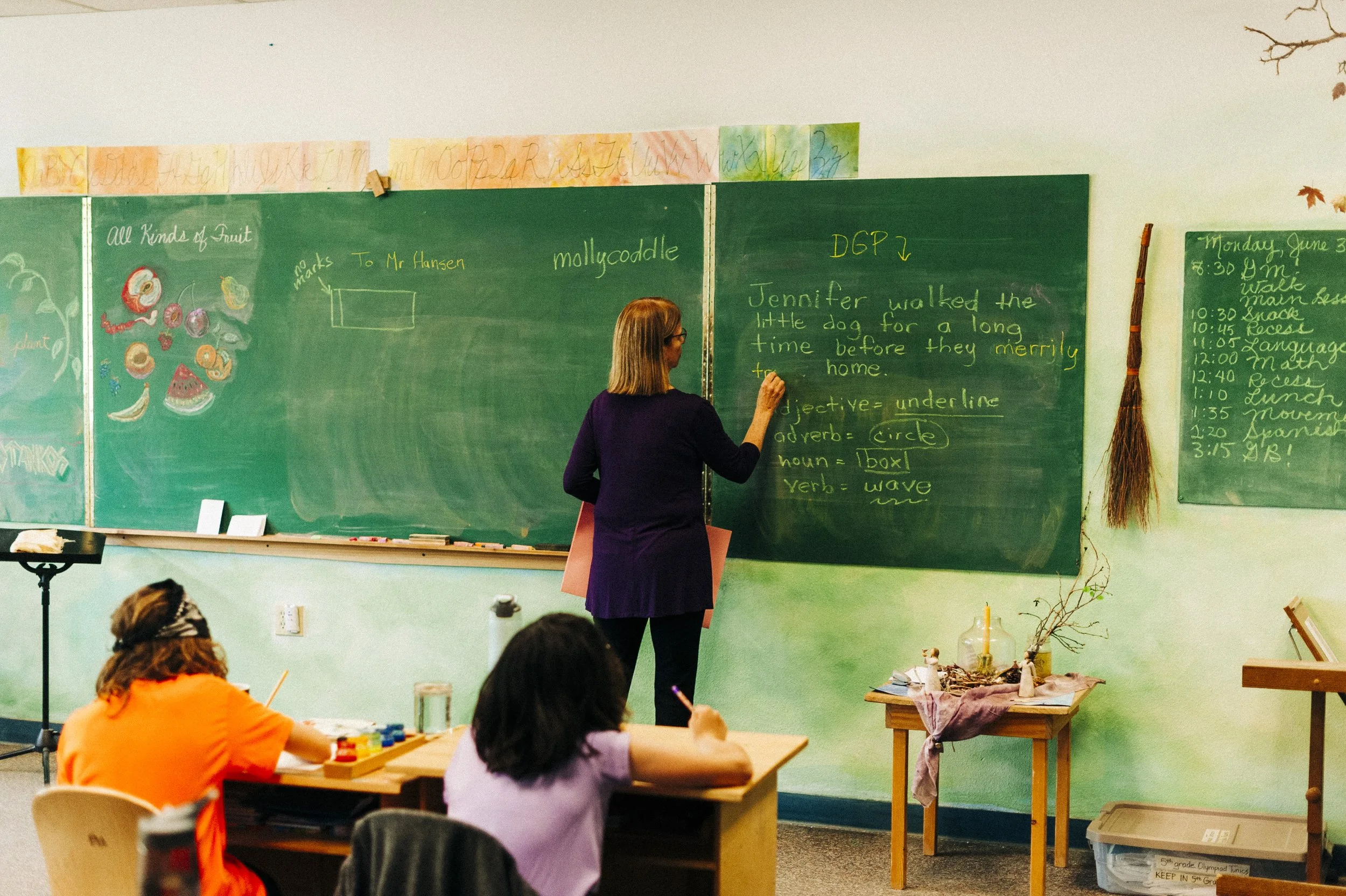
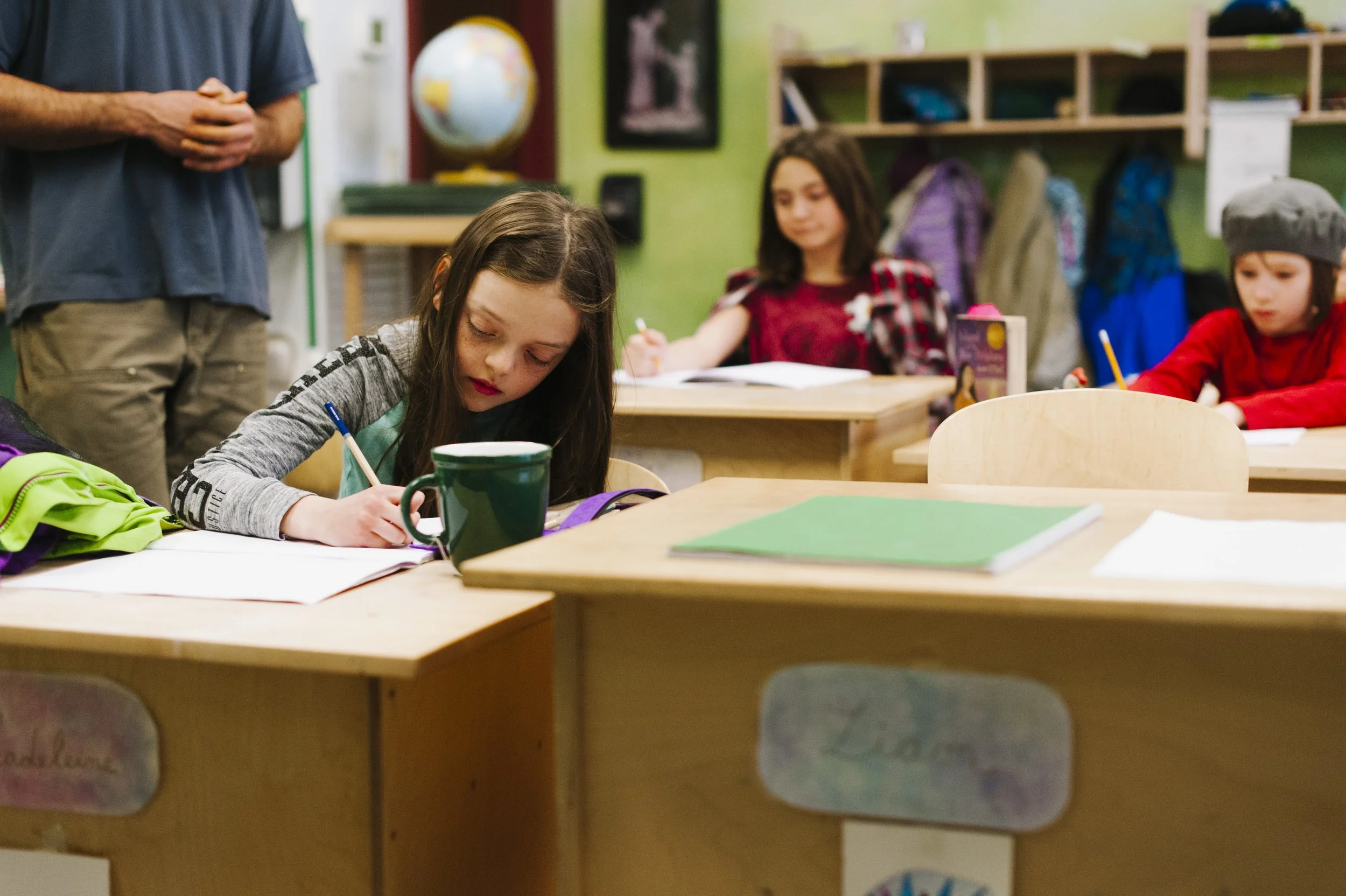
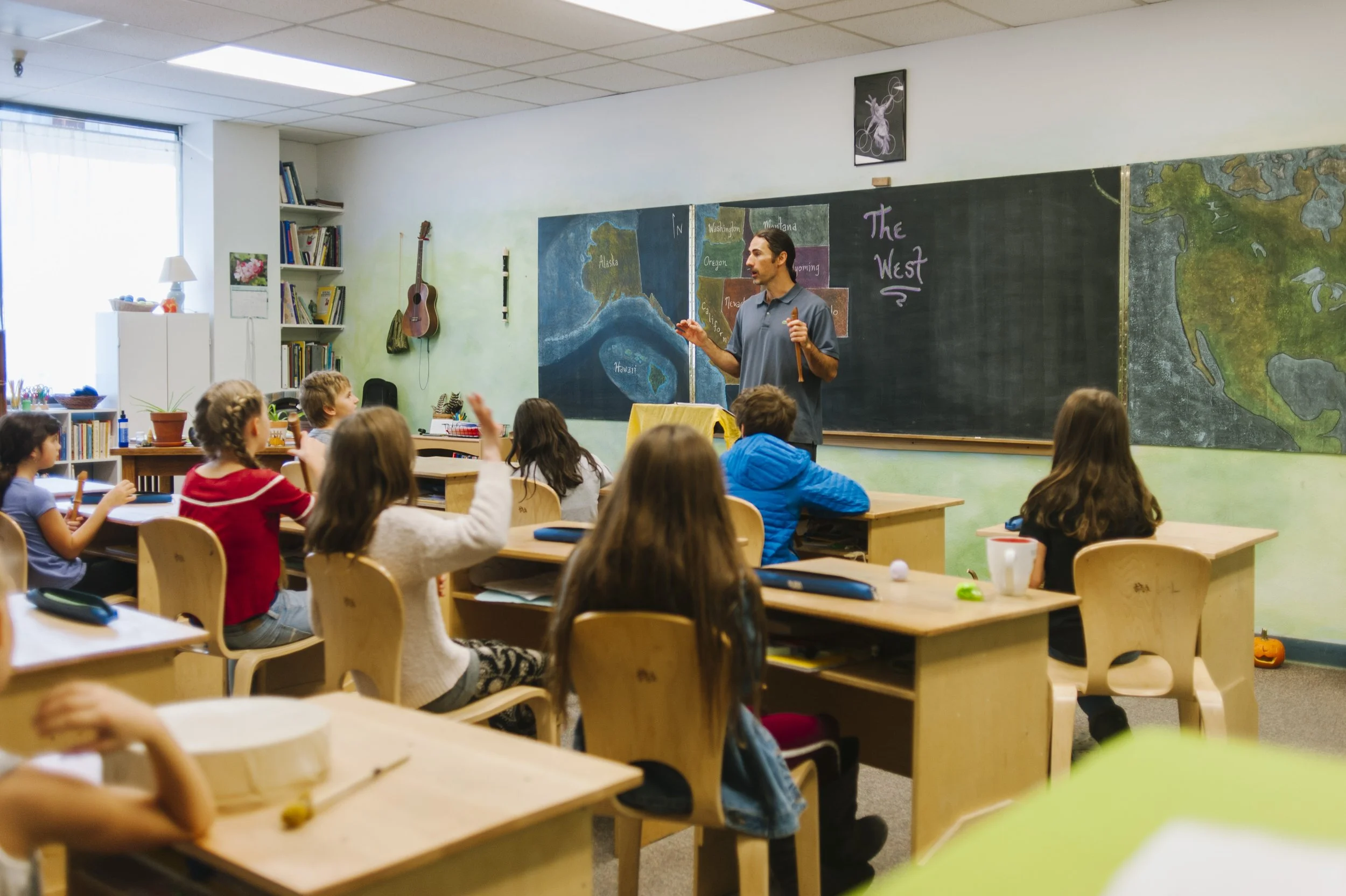
Each morning begins with a focused main Lesson block in language arts, math, science, history or geography. Subjects unfold in multi-week themes and come to life through storytelling, drawing, writing, drama, and hands-on work. This rhythm helps children absorb learning in a lasting way.
-
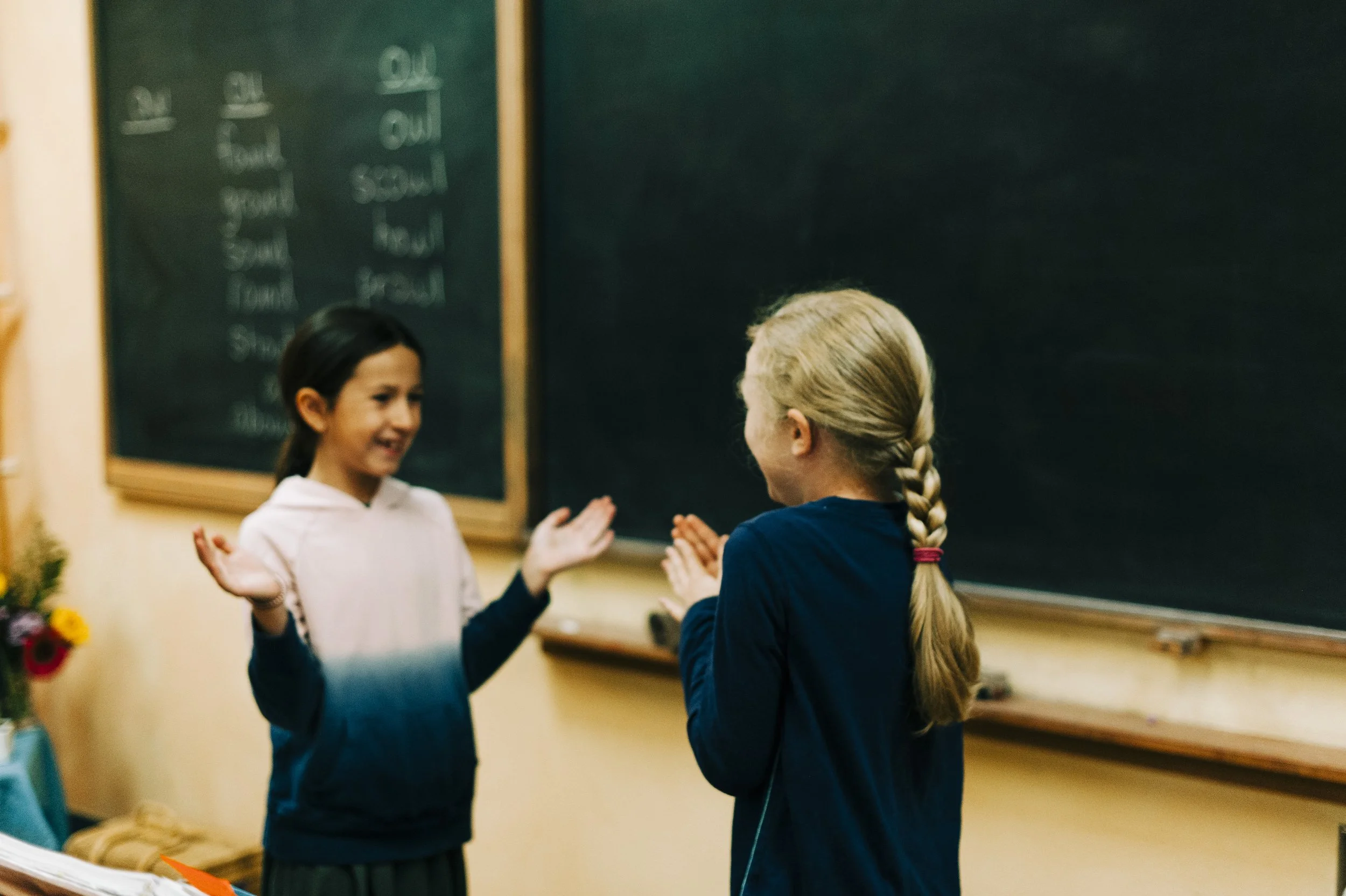
Through eurythmy and daily movement, children meet music, rhythm, and language through the body. Outdoor play and rhythmic games strengthen coordination and focus while supporting healthy social and physical development.
-
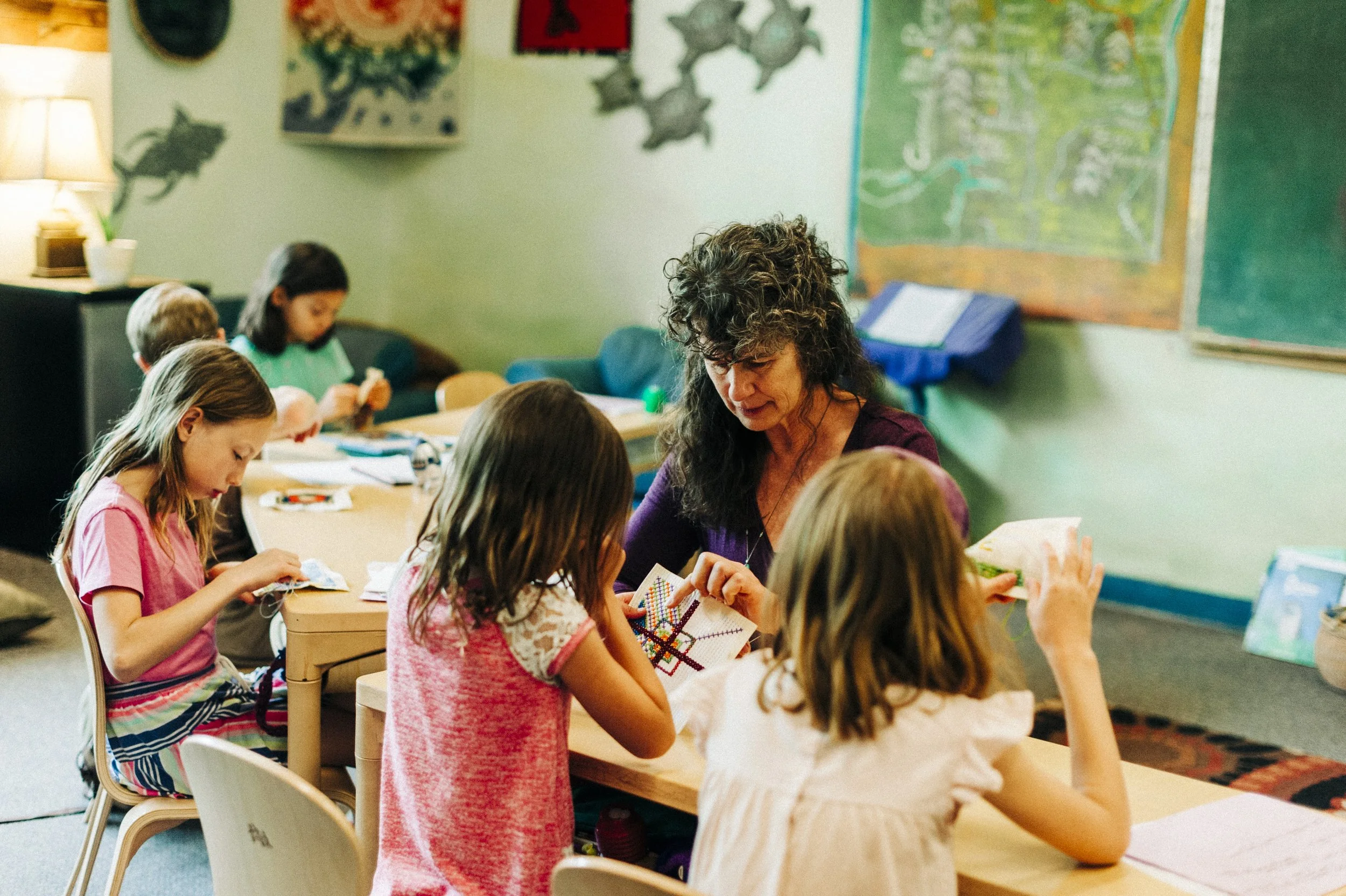
Knitting, sewing, felting, and other handwork build patience and confidence. Practical tasks like gardening and simple crafts help children develop real-world skills and a sense of capability.
-
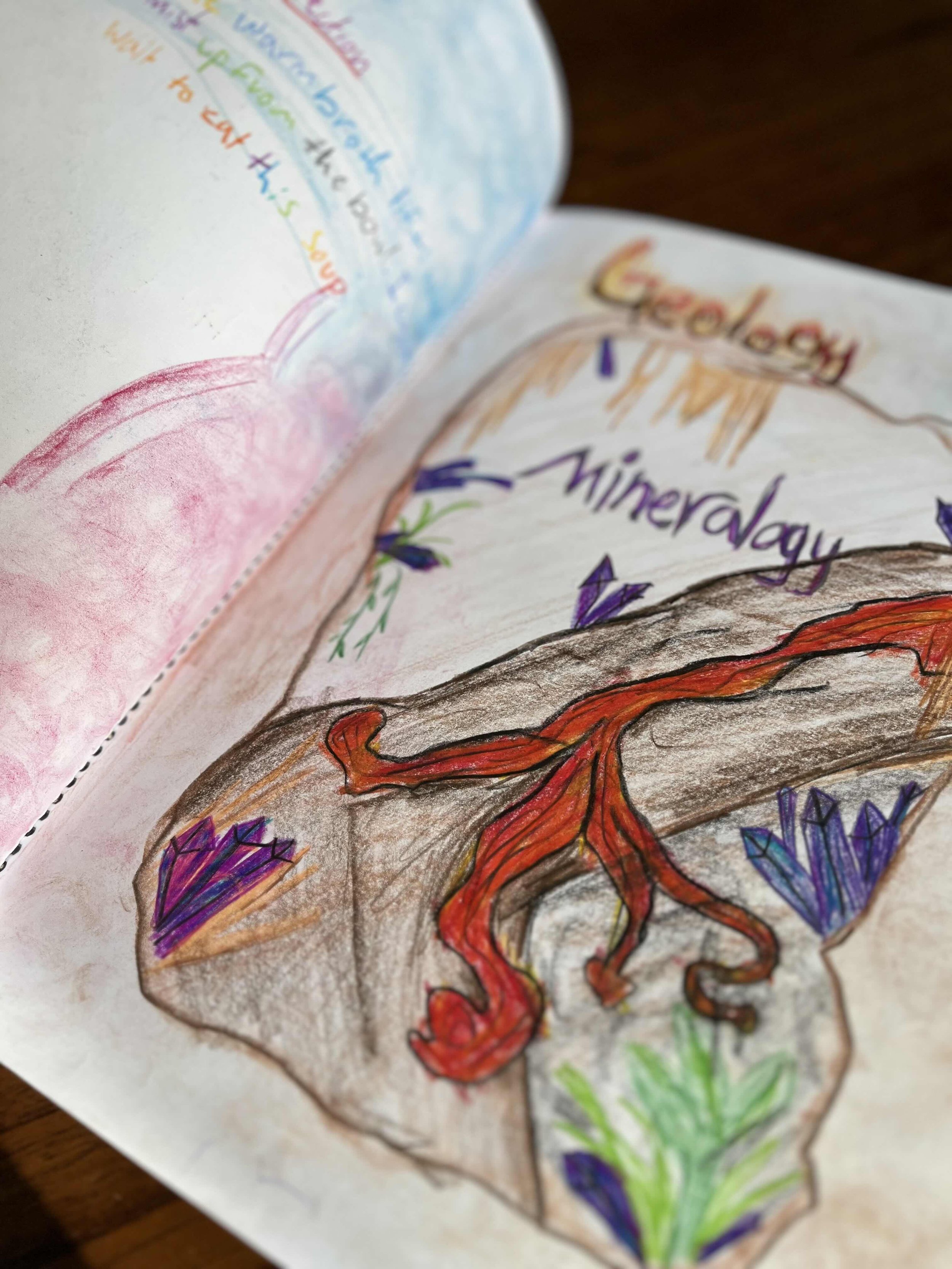
Artistic expressions like painting, drawing, modeling, and form drawing are woven throughout the week. Art isn’t just a class, it’s part of how our children learn. Helping them observe closely and express themselves in their work.
-
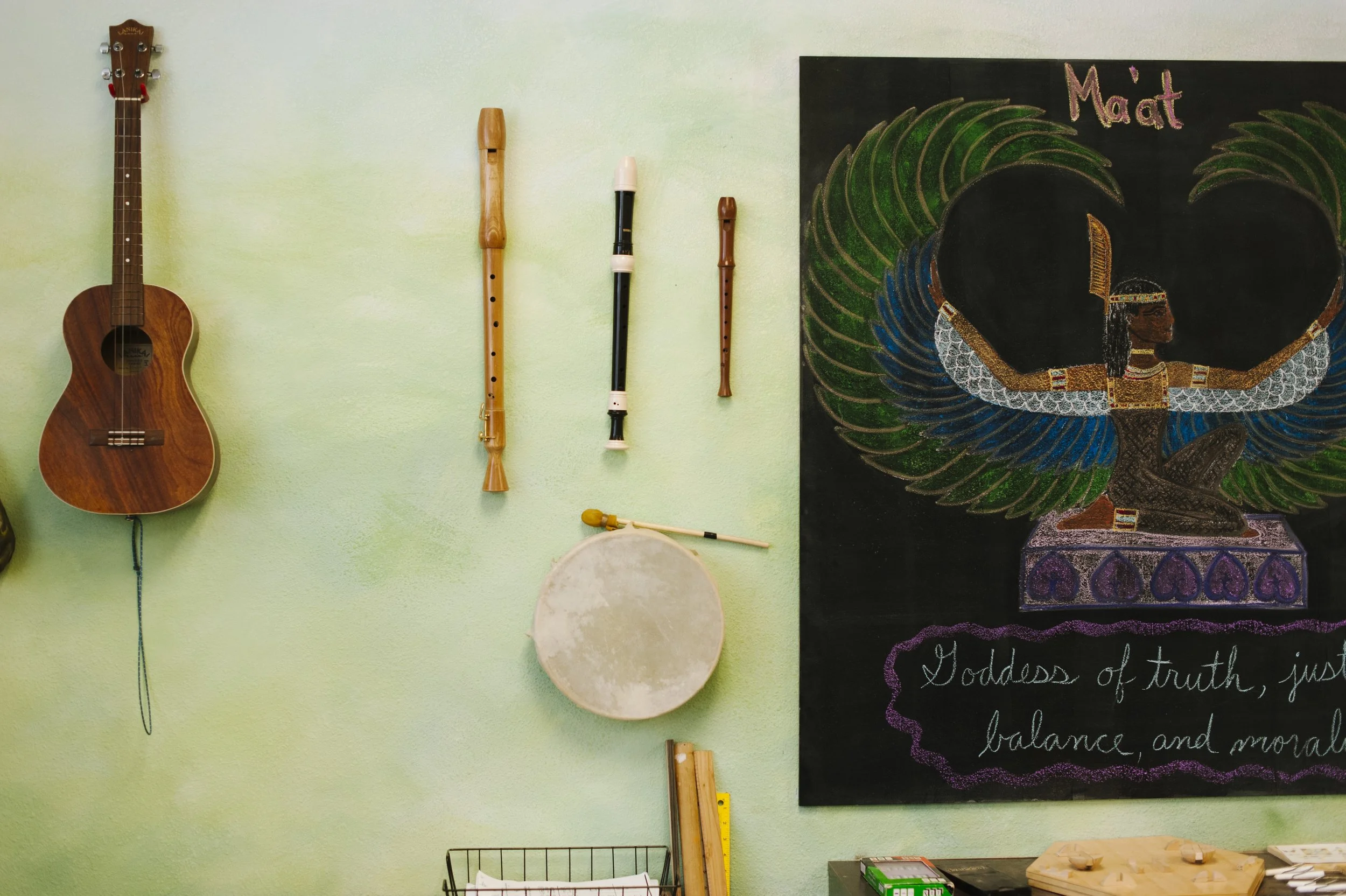
Flute and recorder work, rhythm exercises, and eventually string instruments help children develop discipline and a love of music. Making music together strengthens memory while bringing joy to the classroom.
-
Spanish is introduced through stories, songs, games, and simple conversation. This gentle approach helps children naturally absorb the sounds and patterns of another language while opening them to other cultures.
-
Every day includes time outdoors in all seasons. Children feel the rhythm of the year and form a real relationship with the natural world around them.
GRADES SCHEDULE
8:30 am - 3:30 pm : Monday, Tuesday, Thursday, Friday
8:30 am - 1:30 pm : Wednesday
Aftercare is available each school day until 5:00 pm.
What we value in the lower grades
The core principles that shape how we teach and care for children
-
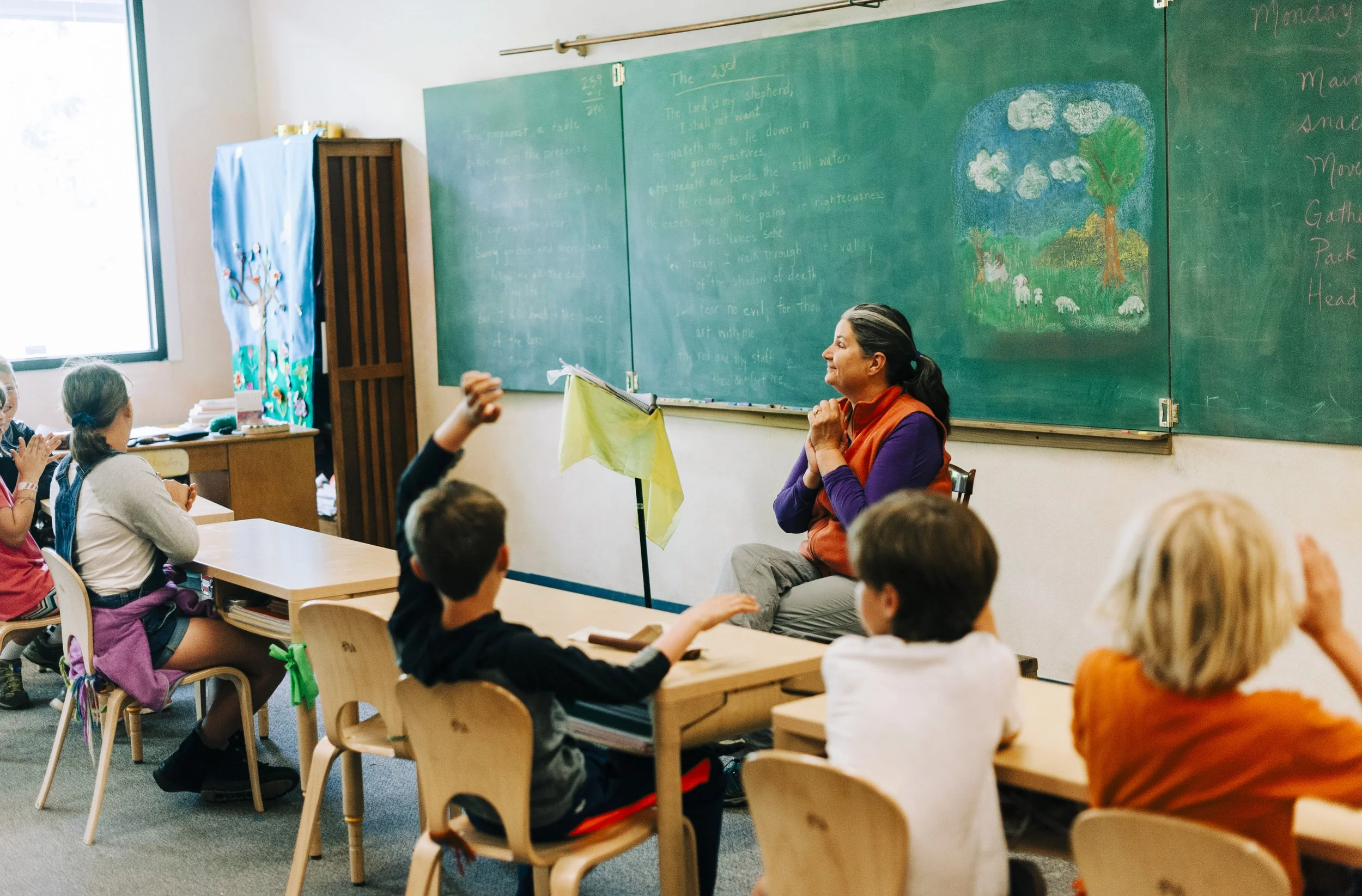
Our environment offers clear expectations, respectful relationships, and meaningful freedom within those bounds, so children feel empowered and supported.
-
Each morning Waldrof children greet their teacher with a handshake, creating a meaningful bond to begin the day. This simple gesture allows the teacher to connect with the child, sense how they’re arriving, and respond to any specific needs they may have.
-
We don’t wait for readiness, we support it. Through deliberate body-mind work, sensory integration, movement, and personalized attention, each child finds their path.
-
Ideally, your child journeys with the same teacher and class community for the first six years, building deep trust and connection.
-
“Prepared for Upper Grades” means that children who know themselves, feel safe, and are ready to learn, not just ones who can recite facts.
Why families choose us
Waldorf offers a genuine community where education is built on honoring childhood as a sacred, foundational season
Small class sizes and strong teacher–child relationships.
A vibrant community of families, children, and educators who value curiosity and creativity.
A preparation for future academics nurtured by deeply rooted principles.
Daily grounding in nature.
Learning that integrates movement and rhythm.
Rich artistic experiences woven into every subject, nurturing every child's imagination.
A tech-free learning environment that protects the child’s imagination.
A classroom that cultivates free thinking by encouraging children to approach challenges with creativity and originality.
A curriculum designed to develop strong problem-solving skills through story, exploration, and hands-on experiences.
TUITION, FEES, AND FINANCIAL ASSISTANCE
A distinctive approach to whole-child education.
The Waldorf School of Bend offers an education that honors childhood and nurtures creativity through intentional learning. Rooted in developmental understanding and a tech-free environment, every lesson engages thinking, feeling, and doing.
Journey through
the grades
GRADE 1
The first step into
formal learning
First Grade in a Waldorf setting is often seen as a time of innocence and harmony. A gentle, sheltered space created by parents and teachers to support the child’s early steps toward adulthood.
Within this nurturing environment the first experiences of letters and numbers are introduced through rich imagination and story, forming the foundation for the abstract thinking that will unfold in later years.
SOCIAL FOCUS
In Grade One, children take their first steps into formal learning within a nurturing and rhythm-filled environment. The social focus is on building a cohesive classroom community where each child feels safe, seen, and connected. Through song, movement, story, and shared work, students grow in emotional confidence and joyful participation. This year fosters a deep sense of “We are a class.”
-
Form Drawing – Introducing balance, pattern, and spatial awareness
Language – Consonants & Vowels – letters brought to life through stories and images
Math – Numbers & Four Processes – exploring number sense, counting, and the four operations
Language – Early writing through letters, words, and simple compositions
Play Block – Imaginative dramatization and class storytelling
Review Block – Integrating and strengthening skills learned throughout the year
GRADE 2
Growing confidence
and community
Much of what is done in the second grade year builds upon the groundwork laid in the first grade, increasing the repertoire of knowledge and skills developed in the previous year.
The second grader’s learning through imitation is still prevalent and their thinking is still very pictorial. Thus the teacher continues to present all lessons through story, images, and activity.
SOCIAL FOCUS
In Grade Two, social life opens into a deeper awareness of others and of self. Children begin to notice differences and explore relationships with curiosity and care. Through meaningful stories, guided interaction, and moral imagination, they learn to discern kindness, fairness, and responsibility. The focus is on understanding one another and developing a heartfelt social sensitivity.
-
Saints and Fables – Stories of saints, legends, fables, and animal tales deepen moral imagination and literacy
Reading and Writing – Lowercase letters, cursive, early readers, dictation, composition, blends, digraphs, and vowel families
Number Sense and Operations – Addition and subtraction facts, place value, carrying/borrowing, times tables 2–12
Multiplication and Division – Multi-digit multiplication and division supported through rich story contexts
Play Block – Class play, dramatic expression, and completion of cursive forms
Review Block – Year-end consolidation of math, language, and artistic skills
GRADE 3
The nine-year change
and emerging independence
Around third grade, children go through a profound developmental shift. They begin to sense themselves as individuals, separate from the world around them.
Questions like “How do I belong?” and “How do I navigate the world?” start to emerge internally, even if they cannot yet express them in words. We explore farming, shelter-building, Hebrew survival stories, and curriculum that mirrors their emerging independence and sense of self.
SOCIAL FOCUS
Grade Three brings an important developmental shift toward independence and grounded belonging. As children feel more separate and aware of the world, the social focus turns to cultivating security through meaningful work, shared responsibility, and clear structure. Students learn to contribute with purpose, care for their community, and grow in confidence as they take their place within the classroom whole.
-
Old Testament stories – Foundational stories supporting the nine-year change; parts of speech, dictation, cursive, and painting
Gardening and Cooking – Practical work connected to measurement: linear, liquid, and dry
Language Arts – Sentence writing, parts of speech, composition, spelling, paragraphs
Time and calendars – Measuring time, telling time, and understanding the cycle of the year
Clothing and Fiber Arts – Practical handwork alongside language arts composition and spelling
Cooking and Baking – Real-life skills paired with money math and multi-place multiplication
Shelters and Building Projects – Individual shelter projects, speech and poetry, and dictionary skills
Outdoor and Practical Work – Outdoor work combined with weight measurement, long division, and the class play
Review Block – Year-end integration of academic and practical skills
GRADE 4
The year of courage, myth & mastery
To understand the fourth-grade curriculum, it’s helpful to recall the path leading up to it, especially third grade. After living in a sense of harmony with the world, the third grader experiences a kind of “fall from paradise,” leaving behind the fairy-tale realm of first grade and the heavenly–earthly duality of second grade.
By fourth grade, the children have fully arrived in themselves and in the world. Now Waldorf supports them in meeting and navigate this new reality.
SOCIAL FOCUS
In Grade Four, students step more fully into their own voice and strength. Social life becomes richer and more complex as friendships deepen and opinions take shape. The classroom supports children in navigating differences with integrity, learning to express themselves clearly, and honoring others. The focus is on balancing individuality with respectful connection.
-
Map Making and Local Geography – Creating maps of the local environment, regional history, and biographies of early explorers and Native peoples
Fractions (Introduction) – Hands-on fraction work: cutting, folding, dividing; adding, subtracting, multiplying simple fractions
Zoology (Human and Animal) – Comparing humans and animals, observing habitats and form, introductory research and descriptive writing
Language Arts and Norse Myths– Norse tales as a foundation for writing, spelling, parts of speech, story retelling, poetry, and recitation; ink, quill, and fountain pen work
Language Arts and Drama– Completing a Norse-themed class drama; tense awareness, descriptive writing, and advanced spelling patterns
Fractions (Deepening) – Equivalent fractions, factoring, simplifying, prime numbers; continued tales from the Kalevala
Review Block – Year-end integration of academic and artistic skills
GRADE 5
Balance between innocence
and wakefulness
The fifth grade is generally a year of balance and harmony, with the children poised between childhood and preadolescence.
It is an age of rapidly flowering powers. The pictorial element is still strong in the children's thought process, but they are also developing the capacity for comprehending matter-of-fact, sense-free concepts and there is dawning a sense of conscience and personal responsibility.
Physically, the children are coordinated, with an increased stamina and an ability to bring beauty to their movement, which is given expression in their fifth year through participation in the Olympiad games.
SOCIAL FOCUS
Grade Five is often described as a “golden year” of social equilibrium. Children show increased maturity, fairness, and capacity for collaboration. They can hold their own ideas while contributing generously to group life. The social focus emphasizes balance, mutual respect, and joyful cooperation as students move together with confidence, grace, and growing perspective.
-
Botany – Observing plant life through nature study, drawing, and classification
Ancient India – Exploring mythology, geography, and culture; practicing retelling, creative writing, and artistic representation
Ancient Persia – Studying moral tales and cultural history; strengthening composition skills, summarizing, and chalkboard drawing
Math – Advancing skills in decimals, fractions, geometry, and multi-step problem solving
North American Geography – Mapping the continent, studying regions and peoples; integrating research, report writing, cartography, and colored-pencil illustration
Mesopotamia – Early civilizations brought to life through stories, timelines, and art; practicing note-taking, summaries, and historic sequencing
Ancient Egypt – Mythology, architecture, and cultural achievements; writing compositions, learning new grammar forms, and creating artistic renderings such as pyramid drawings and hieroglyphic-inspired art
Class Play – A dramatic production rooted in Greek culture; supporting memorization, public speaking, cooperation, stagecraft, and artistic expression
Review Block – Year-end consolidation of academic, artistic, and cultural studies
“If you’ve had the experience of binding a book, knitting a sock, playing a recorder, then you feel that you can build a rocket ship — or learn a software program you’ve never touched. It’s not a bravado, just a quiet confidence. There is nothing you can’t do. Why couldn’t you? Why couldn’t anybody?”
Peter Nitze
(Entrepreneur and graduate of the Rudolf Steiner School, Harvard, and Stanford)